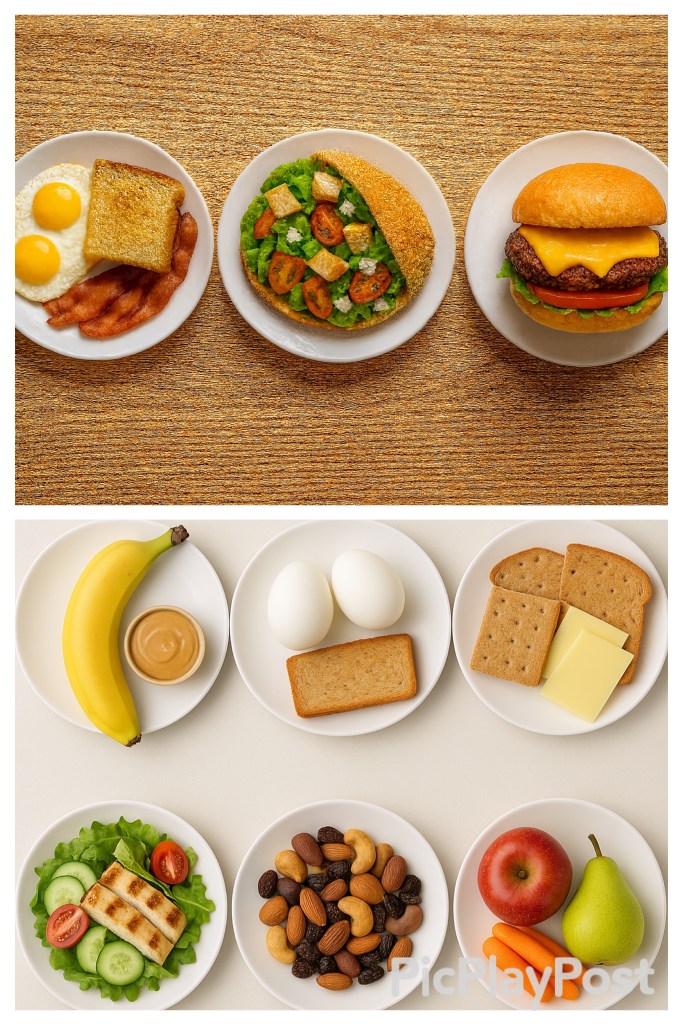
There may be several valid reasons why someone might want to break their 3 regular-sized meals into 6 smaller meals eaten more often throughout the day, such as personal preference, reduced cravings, or maybe it puts less of a strain on digestion for those with GI issues. What eating smaller meals more frequently won’t do, though, is boost your metabolism, as the article Small Meals Help You Lose Weight | Revival Fitness suggests. Let’s use scientific reasoning to debunk the many pieces of misinformation that come up throughout this article.
For starters, the article specifically mentions, “Eating smaller, more frequent meals helps keep your metabolic rate high and efficient, helping to aid in weight loss”. This is not true, and there is limited scientific evidence, if any, to support the claim. On the other hand, there is an overwhelming amount of evidence that supports the opposite, and one study concluded that there were no differences in 24-hour energy expenditure, respiratory quotient, or fat oxidation between those that ate 3 meals vs. 6 meals (Ohkawara et al., 2013). They even added that eating smaller, more frequent meals could increase hunger.
The article also states that by limiting caloric intake to only a few times a day, blood sugar drops, resulting in the person feeling sluggish and craving empty carbs for a quick energy boost. This ‘sluggish’ feeling that can occur would be due to the brain not receiving a steady supply of glucose, which is its main source of energy (Mergenthaler et al., 2013). But in healthy people, this isn’t a problem since the body will break down its stored glycogen in the liver and fuel the brain that way. This is why a person can fast overnight without experiencing hypoglycemia or fatigue; the body is designed to manage it. It only starts to become an issue if the person has depleted liver glycogen stores, which can result from prolonged intense exercise or when starving.
One of the more interesting things that was said in the article mentions how small meals can keep appetite in check. They said it’s better than fluctuating between feeling starving and stuffed after large meals spaced further apart. It’s not right to assume that everyone will experience that from eating 3 meals a day. The more nutrient-dense your foods are, the more filling they will be, which can prevent feeling ‘starved’ after waiting 5-6 hours until the next meal. Someone could argue that eating smaller, more frequent meals allows for a higher chance of overeating during any of those meals.
The article points out that eating too infrequently causes larger insulin spikes, which, in addition to causing increased fat storage, are followed by crashes that result in strong hunger and cravings. This also depends mainly on the types of food that are being consumed. Combining fats with carb-rich foods is a great way to reduce the insulin spike (Gentilcore et al., 2016; Jass, 2020). Foods high in fiber – specifically soluble fiber – can also lessen the glycemic response (Giuntini et al., 2022). In other words, while eating too infrequently can lead to possible insulin spikes followed by crashes, it is very rare for someone to consume a meal consisting of only carbohydrates, without it also including fiber, fats, and protein. Protein can also lower postprandial blood glucose concentrations acutely by slowing gastric emptying, even though it also stimulates incretin hormones and non-glucose-dependent insulin release (Karamanlis et al., 2007). In this way, ‘infrequent eating’ (which is used to describe eating 3 meals a day), doesn’t have to lead to sharp insulin spikes.
Another overexaggeration that’s talked about in the article is “Drops in blood sugar signal your body to go into survival mode, and it releases stress hormones like cortisol and epinephrine (adrenaline). This can lead to mood swings and sleep issues”. Again, this isn’t a result that comes from eating only 3 times a day. It’s a result of not eating the right foods during those times. Eating a good balance of whole grains, protein, and healthy fats will help blood sugar levels be managed at 3 meals per day. There are even studies that mention the benefits of how eating 2 meals a day at breakfast and lunchtime can be more beneficial in preventing type 2 diabetes than eating 6 meals a day (Baheti et al., 2023). It was explained that fasting plasma glucose, glucagon, C-peptide, and hepatic fat content was reduced, and insulin sensitivity was improved. With improved insulin sensitivity, less insulin is required to move glucose from the bloodstream into cells, effectively helping to prevent hyperglycemia and hypoglycemia. There are also many studies explaining the benefits of reduced body weight, hepatic fat content, fasting plasma glucose, C-peptide, glucagon, and increased oral glucose insulin sensitivity from participants who had type 2 diabetes and were eating 2 meals per day at breakfast and lunch compared to 6 meals (BBC News, 2014; Gomez-Ruiz et al., 2024; Kahleova et al., 2014).
At the end of the article, it’s mentioned that what you eat is still important for ensuring weight loss happens. This part is true, and it’s the biggest factor that impacts blood sugar levels, insulin spikes, cravings, and mood swings, much more than meal frequency. 6 small meals might be better for some people in managing hunger, and 3 regular-sized meals might be better for others. There is no conclusive statement that says 4-6 meals is definitely better than 3 meals a day for weight loss, just like there is no conclusive statement that says 3 meals a day is better. Weight loss comes down to the amount of calories consumed at the end of the day, and there is no metabolic benefit that will be gained from eating smaller, more frequent meals if calories are matched.
References:
Baheti, B., Salunkhe, K., Thorat, V., & Loh, Y.-H. (2023). Association between meal frequency and type 2 diabetes odds in US adults: Evidence from the National Health and Nutrition Examination Survey. Nutrients, 15(10), Article 2283. https://doi.org/10.3390/nu15102283
BBC News. (2014, May 16). Two meals a day ‘effective’ to treat type 2 diabetes. https://www.bbc.com/news/health-27422547
Gentilcore, D., Chaikomin, R., Jones, K. L., Russo, A., Feinle-Bisset, C., Wishart, J. M., Rayner, C. K., & Horowitz, M. (2006). Effects of fat on gastric emptying of and the glycemic, insulin, and incretin responses to a carbohydrate meal in type 2 diabetes. The Journal of Clinical Endocrinology & Metabolism, 91(6), 2062-2067. https://doi.org/10.1210/jc.2005-2644
Giuntini, E. B., Hoffmann Sardá, F. A., & de Menezes, E. W. (2022). The effects of soluble dietary fibers on glycemic response: an overview and future perspectives. Foods, 11(23), 3934. https://doi.org/10.3390/foods11233934
Gómez-Ruiz, R. P., Cabello-Hernández, A. I., Gómez-Pérez, F. J., & Gómez-Sámano, M. Á. (2024). Meal frequency strategies for the management of type 2 diabetes subjects: A systematic review. PLoS ONE, 19(2), e0298531. https://doi.org/10.1371/journal.pone.0298531
Jass, D. K. (2020). 721-P: Fat added to high-glycemic–index foods reduces both glycemic and insulinemic response to moderate-size meals [Abstract]. Diabetes, 69(Suppl 1), 721-P. https://doi.org/10.2337/db20-721-P
Kahleova, H., Belinova, L., Malinska, H., Oliyarnyk, O., Trnovska, J., Skop, V., Kazdova, L., Dezortova, M., Hajek, M., Tura, A., Hill, M., & Pelikanova, T. (2014). Eating two larger meals a day (breakfast and lunch) is more effective than six smaller meals in a reduced-energy regimen for patients with type 2 diabetes: A randomized crossover study. Diabetologia, 57(8), 1552–1560. https://doi.org/10.1007/s00125-014-3253-5
Karamanlis, A., Thomsen, C., Møller, J. L., Holst, J. J., & Hermansen, K. (2007). Effects of protein on glycemic and incretin responses and gastric emptying of glucose and sucrose in healthy humans. The American Journal of Clinical Nutrition, 86(4), 1185-1191. https://doi.org/10.1093/ajcn/86.4.1185
Mergenthaler, P., Lindauer, U., Dienel, G. A., & Meisel, A. (2013). Sugar for the brain: The role of glucose in physiological and pathological brain function. Trends in Neurosciences, 36(10), 587-597. https://doi.org/10.1016/j.tins.2013.07.001
Ohkawara, K., Cornier, M. A., Kohrt, W. M., & Melanson, E. L. (2013). Effects of increased meal frequency on fat oxidation and perceived hunger. Obesity (Silver Spring), 21(2), 336-343. https://doi.org/10.1002/oby.20032
 Quick Silver Nutrition
Leave a comment